

Company News
Industry dynamics
Mixing method of aluminum silicon carbide
The two substances silicon carbide and aluminum produce a chemical reaction. It is a thermal reaction, and the temperature may reach about 1450 degrees to form a solid solution. The chemical equation is as follows: SiC Al = Al3Si4 (heated)
30
2023
/
08
What is the aluminum silicon carbide substrate and the advantages and disadvantages of the aluminum silicon carbide substrate
1. AlSiC has high thermal conductivity (170~200W/mK), which is ten times that of general packaging materials. It can dissipate the heat generated by the chip in time and improve the reliability and stability of the entire component 2. The thermal expansion coefficient of AlSiC is well matched with the semiconductor chip and the ceramic substrate, and the adjustable thermal expansion coefficient (6.5~9.5 × 10⁻⁶/K) can prevent fatigue failure, and even the power chip can be directly mounted on the AlSiC substrate.
28
2022
07
Introduction of aluminum silicon carbide
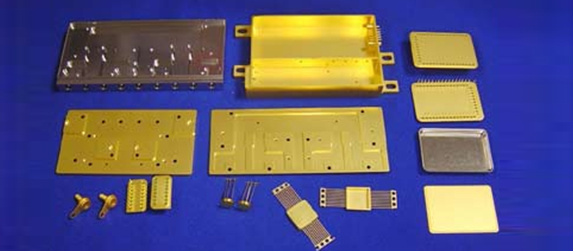
Aluminum silicon carbide is one of the most common and important materials in metal matrix composites. Aluminum silicon carbide is a kind of particle reinforced metal matrix composite material, using Al alloy as the matrix, according to the design requirements, in a certain form, proportion and distribution state, with SiC particles as reinforcement, constitute a clear interface of multi-group phase composite material, both a single metal does not have the comprehensive superior performance.
10
01
Specific heat capacity of aluminum and silicon carbide
The heat absorbed by a temperature increase of 1 ℃ per unit mass of a substance is called the specific heat capacity of the substance. It has nothing to do with temperature. The specific heat capacity of aluminum is 0.88 × 10³ J/(kg ℃), which means that 1kg of aluminum will absorb 0.88 × 10³J of heat when it rises by one degree Celsius.
12
2021
11
